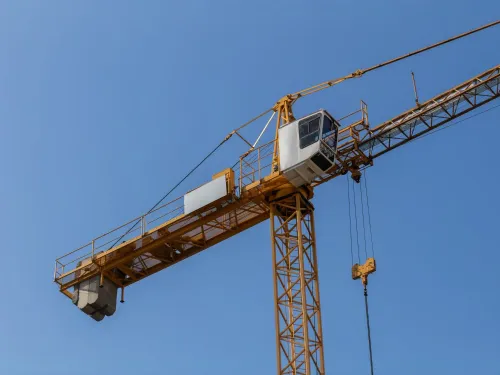
A ground-supported crane can lift and travel across an open yard without relying on a building’s roof structure, but its rails, foundations, drainage and traffic clearances become part of the lifting system. By the end, you will be able to compare a Goliath crane with other lifting options, define the right specification and identify the Ahmedabad site conditions that can make or break performance.
Key takeaways
- Choose a goliath crane when ground rails suit an open, repeatable lifting route.
- Compare safe working load, span, lift height and duty cycle before selecting equipment.
- Design rails, foundations, drainage and wind controls for Ahmedabad’s outdoor conditions.
- Require load tests, emergency stops, limit switches and operator training before handover.
How a Goliath Crane Moves Loads Across an Open Work Zone
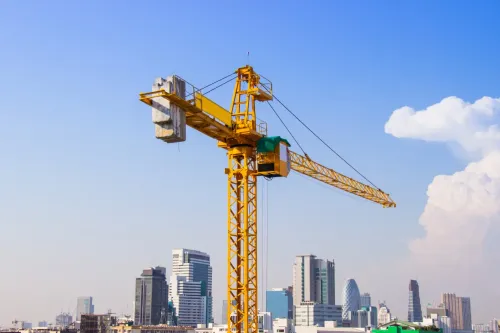
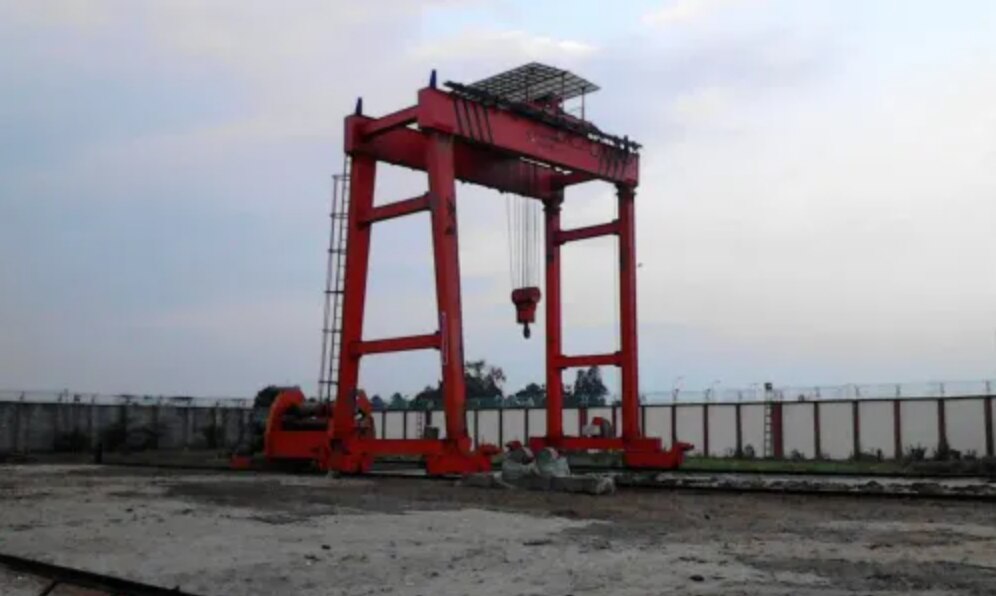
A Goliath crane moves loads along a defined rectangular route using two ground rails, rather than a building-supported runway. Its portal legs stand on end carriages that roll along the rails; a bridge girder spans between the legs, while a trolley carries the hoist across that girder.
The hoist raises the load vertically, the trolley positions it across the width, and the end carriages travel the crane along the yard or bay. This three-axis movement lets goliath cranes material handling operations serve steel stockyards, precast yards, fabrication areas and machine-loading zones without strengthening the roof structure.
The crane needs more than its nominal span. Reserve space for these physical and operating requirements:
- Two level, parallel rails with foundations designed for wheel loads, drainage and accurate alignment.
- A clear travel length beyond the loading points, including end clearances and buffers.
- The full portal width between the legs, plus safe separation from trucks, forklifts, stacked materials and buildings.
- Vertical clearance for the girder, trolley, hook, load and any load that swings during travel.
- An unobstructed emergency route beside or across the operating zone.
Unlike an EOT crane, the Goliath crane occupies the floor with rails and legs, so check truck routes and stacking positions with the crane at its most restrictive location. Outdoor versions also need a power-collection system suited to dust and rain, such as protected conductors, a cable reel or a properly guarded festoon.
Where Goliath Cranes Outperform EOT Cranes, Mobile Cranes and Forklifts
The strongest goliath crane benefits in Ahmedabad appear where heavy loads move repeatedly through a defined rectangle in an open yard, fabrication bay, precast area or machine-loading zone. The crane serves the whole rail length without needing a building-supported runway.
| Option | Floor and access impact | Best-fit situation | Main limitation |
|---|---|---|---|
| Goliath crane | Permanent rails and legs occupy ground space | Steel stockyards, precast yards and heavy fabrication with repeated lifts | Restricts truck routes, forklift aisles and emergency access |
| EOT crane | Keeps the floor open but requires runway beams and a suitable building | Indoor factories with frequent lifting along a fixed bay | Cannot serve areas beyond the building runway |
| Mobile crane | No permanent rails; relocates between positions | Irregular sites, temporary lifts and changing pick points | Setup time, outrigger space and repeated hire or mobilisation cost |
| Forklift | Uses existing floor routes and needs no runway | Pallets, short moves and moderate loads | Poor choice for heavy suspended loads, high lifts or long travel paths |
Choose the goliath arrangement when the same load path justifies permanent rails, foundations, drainage and power collection. Its legs are a benefit outdoors, but they become an obstruction if vehicles must cross the operating envelope.
Compare total installed and operating cost, not only the crane quotation. Include rails, foundations, electrical supply, storm restraints, protective coating, inspection access and future wheel or rail replacement. Outdoor dust and monsoon rain also make cable protection, earthing and maintenance isolation important when comparing cranes in Ahmedabad.
The Crane Specification That Matches Your Actual Work Cycle
A 20-tonne rating does not make a crane suitable. A lower-capacity crane with the correct duty class can outperform a heavier crane that was designed for occasional lifting. Define the complete work cycle before comparing quotations.
- State the safe working load, including the heaviest payload, lifting gear and any spreader beam.
- Measure the required span, rail-to-rail travel length, hook approach, lifting height and clearances above the load.
- Specify hoist lifting speed, trolley travel speed and crane travel speed; slow, precise movement may matter more than maximum speed.
- Record the load spectrum, lifts per hour, operating hours per shift, starts per day and required duty classification.
- Identify payload dimensions, centre of gravity, outdoor or indoor exposure, operating wind limit and parked-crane wind condition.
- List auxiliary equipment such as a second hoist, magnet, grab, weighing device or remote control.
- State acceptance tests and the governing editions of IS 3177 and IS 807, including overload, travel-limit and emergency-stop checks.
Single- and double-girder choices involve different trade-offs:
| Arrangement | Main advantage | Cost or design consequence |
|---|---|---|
| Single girder | Lower steel weight and wheel loads | Less headroom and stiffness for demanding cycles |
| Double girder | Better headroom, stiffness and wheel-load capacity | Higher crane weight, foundation demand and capital cost |
For an industrial crane in Ahmedabad, select the arrangement from hook approach, span, duty cycle and allowable wheel loads—not capacity alone. Include rail clamps, storm anchors and anti-derailment protection when outdoor wind could move an idle crane.
Rails, Foundations and Ahmedabad Weather Conditions to Design For
Design the ground system before ordering the crane: two parallel rails need level, aligned, load-bearing foundations, drainage and a defined vehicle-clearance zone. The legs and end carriages transfer wheel loads into those rails, so settlement or rail-gauge variation can cause skewing, flange wear and travel faults.
A lower quoted crane price can vanish in civil rework.
For cranes in Ahmedabad, include these installation provisions:
- Cast reinforced rail beams or slabs for the manufacturer’s wheel loads, braking forces and soil conditions; verify bearing capacity and settlement.
- Set rails to the specified gauge, elevation, straightness and end-stop positions, then survey them after foundation curing.
- Give each rail foundation drainage falls, accessible drains and a method for clearing monsoon silt, leaves and debris.
- Keep trucks, stored steel and pedestrian routes outside the crane’s wheel path, buffers and maintenance-access envelope.
- Select festoon, cable-reel or conductor-bar power collection for dust, rain and travel length; provide suitable ingress protection, earthing and lockable isolation.
- Design the parked-crane wind case separately from operating wind. Specify rail clamps or storm anchors, buffers and anti-derailment arrangements using IS 875 (Part 3), not the lifting capacity alone.
- State emergency stop, overload protection, hoist and travel limits, warning devices, anti-collision controls and maintenance isolation in the acceptance tests.
The goliath crane benefits in Ahmedabad include avoiding a building-supported runway, but the rails, foundations, storm restraints, coatings and inspection access remain part of total installed and operating cost. Reference IS 3177 and IS 807, naming the governing editions and required tests.
A Safe Operating and Project-Delivery Checklist
Before the first lift, assign one person control of the operation and keep pedestrians, vehicles and stored material outside the marked travel and drop zones. This discipline matters as much as the crane’s rated capacity.
1. Confirm the lift plan: load weight, centre of gravity, lifting points, rigging capacity, route, landing area and safe working load. Check that the load will clear rails, vehicles, structures and people. Stop if the weight is unknown or the sling angle reduces capacity.
2. Test the controls before loading. Verify upper and lower hoist limits, cross-travel and long-travel limits, emergency stop, overload protection, brakes, audible or visual alarms and anti-collision devices. Use one agreed signal system and stop the lift after any abnormal noise, sway or brake response.
3. Release the crane for operation only after checking rail alignment, end stops, buffers, wheel anti-derailment arrangements, foundations, drainage, earthing, incoming power and cable routing. An outdoor crane also needs a documented operating-wind limit and rail clamps or storm anchors for the parked-crane wind case under IS 875 (Part 3).
4. Close the project with no-load and rated-load tests, statutory inspection, operator training, maintenance isolation instructions, load-test certificates, as-built drawings and spare-parts details. State the governing editions of IS 3177 and IS 807 in the purchase order.
Hi-Tech Industries can help coordinate these interfaces when supplying an industrial crane in Ahmedabad, preventing civil and electrical gaps from delaying commissioning of goliath cranes material handling systems.
Related product
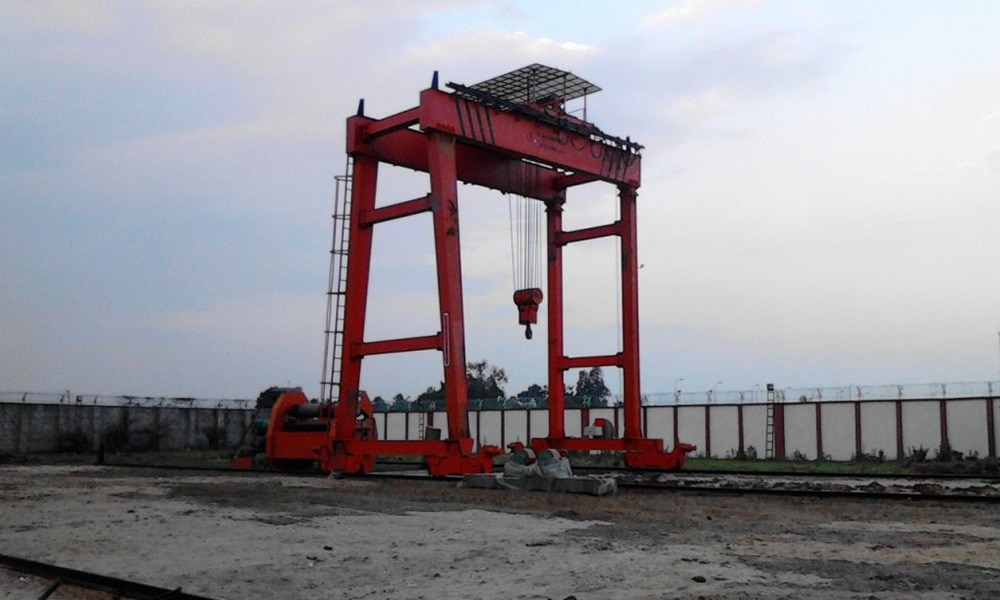 | Goliath Cranes HI-TECH Goliath Cranes are engineered for high-performance heavy material handling, delivering robust reliability, minimal maintenance, and strict... View product → |
Frequently asked questions
How does a goliath crane move loads across an open work zone?
Portal legs sit on end carriages that travel along two ground rails. A bridge girder spans the legs, and a trolley-mounted hoist moves the load across the span.
When does a goliath crane outperform an EOT crane?
A goliath crane suits open yards and bays where installing a building-supported runway is impractical. An EOT crane is better when the building already has suitable columns and runway beams.
How should you compare a goliath crane with mobile cranes and forklifts?
Use a goliath crane for repeated lifting along a fixed route. Choose a mobile crane for temporary positions or changing lift locations, and a forklift for shorter, lower-capacity pallet movements.
Which crane specifications must match the work cycle?
Match safe working load, span, lift height, hook approach, travel and hoist speeds, control method, duty classification and the number of lifts per hour to the actual operation.
What site conditions matter when installing rails for a goliath crane in Ahmedabad?
Check rail alignment, foundation capacity, drainage, waterlogging, concrete quality, expansion movement and wind exposure. Outdoor equipment also needs suitable corrosion protection and storm operating controls.
Keywords