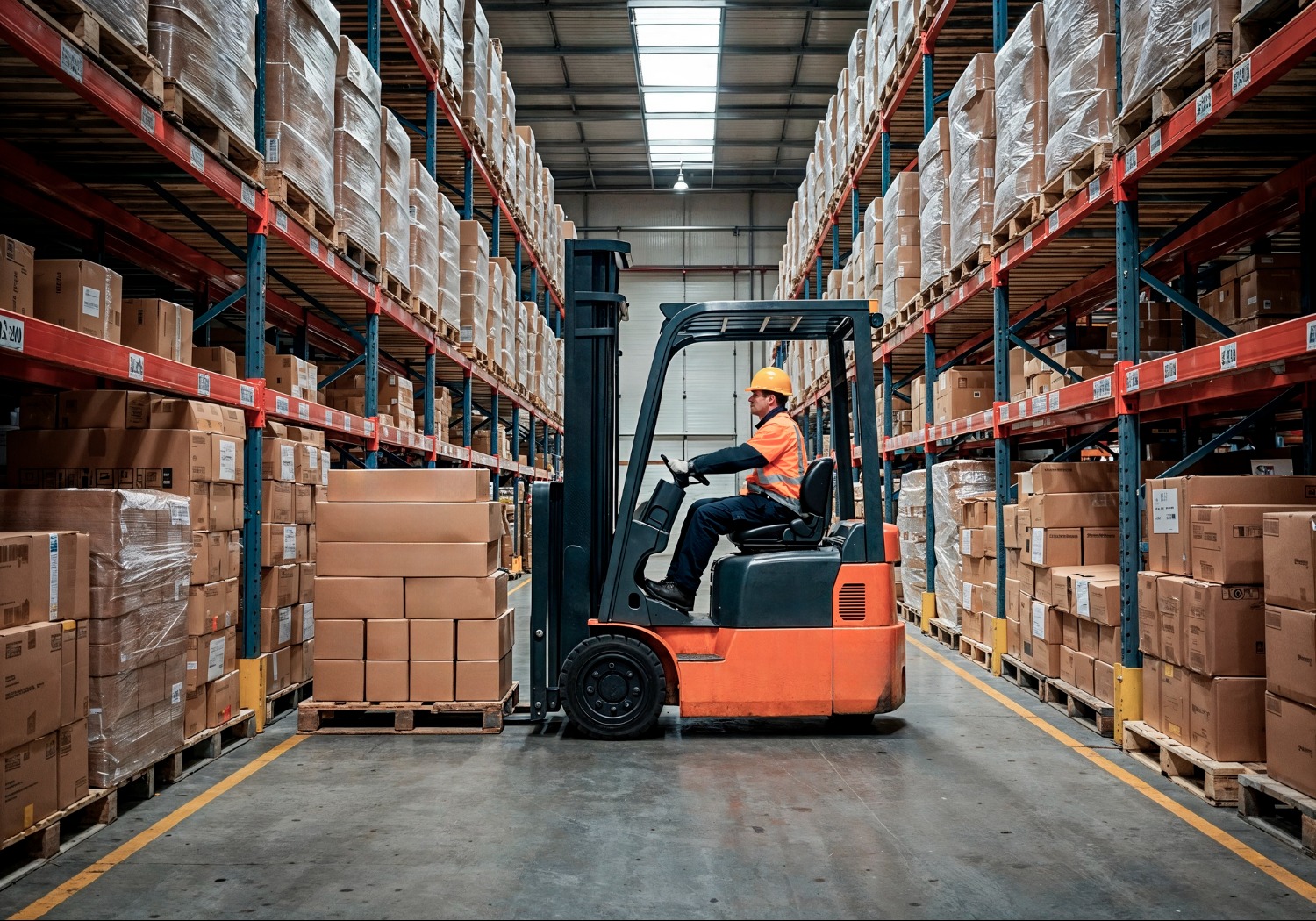
Poor Material Handling rarely appears as one dramatic problem. More often, it shows up as repeated forklift movements, unnecessary manual handling, waiting between production stages, congested aisles, difficult loading procedures, and inefficient movement of heavy components.
For manufacturing businesses in Ahmedabad, Gujarat, improving material flow can therefore begin with observing how products actually move through the facility.
Look for Repeated Movement
A component that travels unnecessarily between several locations adds handling time without adding value.
Map the journey from raw material receipt through production, inspection, storage, and dispatch. Look specifically for backtracking, repeated lifting, temporary storage, and unnecessary transfer between handling systems.
These patterns often reveal opportunities for improvement.
Separate Vertical and Horizontal Handling Needs
Different equipment solves different problems.
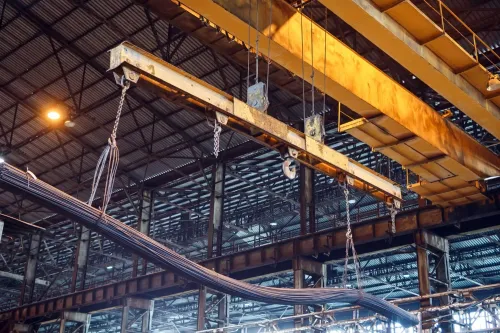
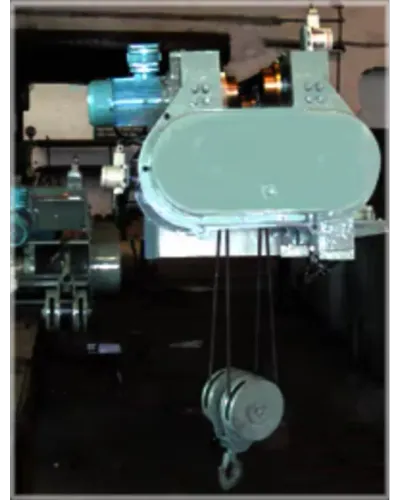
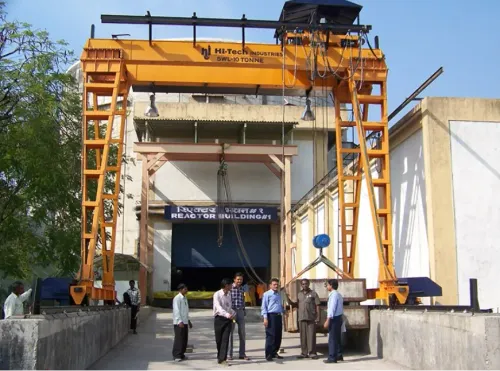
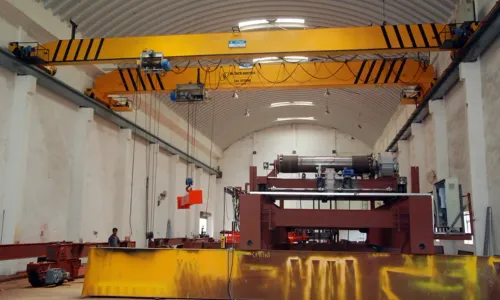
Hoists primarily support vertical movement. Cranes can combine vertical lifting with horizontal travel. Trolleys, conveyors, forklifts, and other systems serve different movement requirements.
Trying to solve every handling problem with one type of equipment can create inefficiencies.
Instead, determine what movement is actually required at each production stage.
Consider Safety and Productivity Together
An efficient process should not require workers to improvise lifting methods or repeatedly handle loads manually where mechanical assistance is appropriate.
Similarly, adding equipment without considering pedestrian movement, machinery access, loading zones, and workflow can introduce new complications.
Material flow should therefore be evaluated as part of the complete workplace layout.
Identify Bottlenecks
Watch what happens during a normal shift.
Are operators waiting for lifting equipment to become available? Are several departments dependent on a single handling system? Does loading interrupt production? Are heavy parts temporarily stored because they cannot move immediately to the next operation?
These observations can help identify where additional capacity or a different handling arrangement may be valuable.
Evaluate the Return Beyond Labour Savings
Better handling can potentially influence several operational factors, including:
- Movement time
- Equipment waiting time
- Floor congestion
- Manual handling requirements
- Product handling consistency
- Production flow
- Use of available space
The value of an improvement should therefore be considered across the complete process rather than only against the initial equipment cost.
HI-TECH INDUSTRIES serves industrial lifting and handling requirements in Ahmedabad, where manufacturing layouts can range from compact workshops to larger production facilities.
Before investing in new Material Handling equipment, plant teams can benefit from documenting existing movement for several working cycles. Record where delays occur, which loads are difficult to handle, and where operators rely on inefficient workarounds.
Equipment selection becomes far more meaningful when it addresses a clearly identified movement problem rather than simply adding another machine to the factory.
Keywords