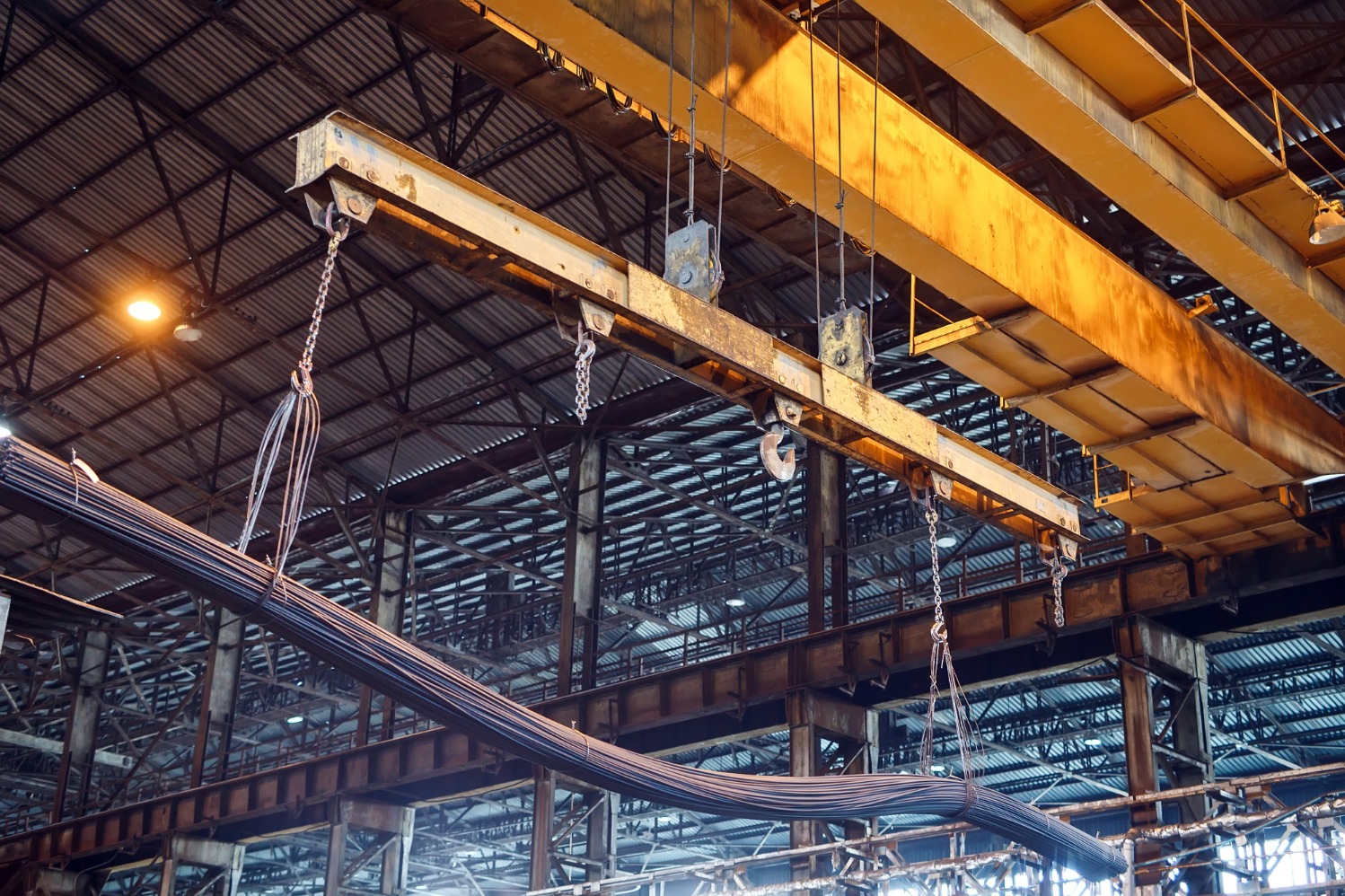
Industrial lifting starts long before a load leaves the ground. The most important decisions are often made during planning, when engineers and facility teams determine what needs to move, how heavy it is, where it needs to travel, and how frequently the movement will occur.
For manufacturing and engineering facilities across Ahmedabad and Gujarat, properly defining these requirements can prevent both under-specification and unnecessary equipment investment.
Start With the Actual Load
Do not rely only on an approximate weight.
Record the maximum expected load along with its dimensions, shape, centre of gravity, and available lifting points. A compact machine component and a long fabricated structure can create very different handling requirements even at similar weights.
Where multiple products are handled, identify both typical and maximum loads.
Map the Movement
Next, consider where the load starts and where it must finish.
Does it only need vertical movement? Must it travel along a production bay? Does it need to cover most of a workshop? Is equipment being selected for one workstation or several production stages?
Mapping this route helps determine whether the requirement calls for a fixed hoist, travelling arrangement, overhead crane, or another handling configuration.
Examine the Working Environment
Industrial conditions can influence equipment design.
Important considerations may include:
- Indoor or outdoor installation
- Dust and contamination
- Temperature conditions
- Moisture exposure
- Hazardous operating areas
- Restricted headroom
- Nearby machinery
- Building dimensions
Where special environmental risks exist, standard equipment may not be appropriate.
Determine How Often Equipment Will Operate
A lifting system used for occasional maintenance has a fundamentally different workload from equipment supporting continuous manufacturing.
Estimate the number of lifts, typical load, operating hours, and movement patterns. This information helps manufacturers understand the expected duty rather than selecting equipment purely by tonnage.
Include Future Requirements
Factories change.
Production may increase, machinery layouts may be modified, and heavier products may be introduced. While unnecessary oversizing can increase costs, completely ignoring foreseeable changes can also limit the usefulness of a new system.
Ahmedabad has a broad industrial base where engineering and manufacturing facilities often need lifting systems adapted to individual plant layouts.
HI-TECH INDUSTRIES works with industrial lifting requirements in this environment, where understanding the application is an essential first step before equipment specifications are finalised.
A useful lifting requirement document should therefore answer six questions: what is being lifted, how much does it weigh, how high must it move, how far must it travel, how frequently will it operate, and under what environmental conditions?
With those answers available, equipment discussions become considerably more precise and productive.
Keywords